Current plugs
The plugs in this family are the ones that need moving water. Dragged across a still pond they are unimpressive; swung into a rip, an inlet or a canal on a tight line they come alive, because the current is what supplies the pressure their shapes are cut to react to. The angler's job shifts from making the plug move to putting it where the water will move it.
That changes how you cast. Instead of throwing at fish and retrieving, you cast up current or across it, take up slack until you feel the plug load, and then hold contact while the tide carries it through the seam. Reeling is only there to keep the line tight. Where those seams form is covered in reading the surf.
The four types compared
What supplies the action, and where each one sits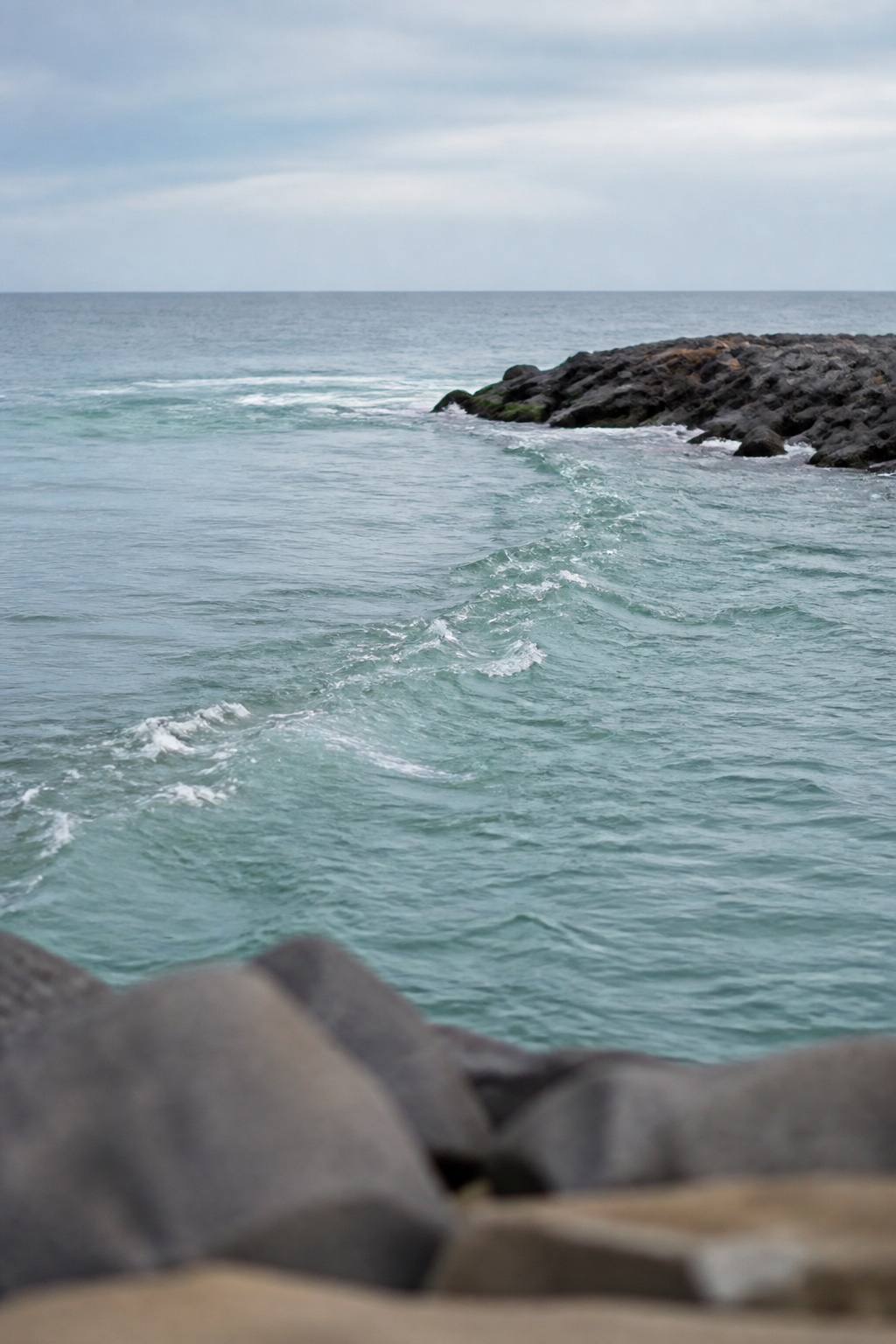
| Type | What drives it | At rest | Water it suits | Casting |
|---|---|---|---|---|
| Darter | Current on the face | Floats | Rips, inlets, canals | Good |
| Needlefish | Current and rod work | Sinks or floats | Fast, clear water | Excellent |
| Bottle plug | Its own mass | Floats low | Heavy surf, hard wind | Excellent |
| Eel skin plug | The soft skin | Depends on body | Night, moving water | Fair |
Entries in this family
CU-01 to CU-04-
CU-01
Darter
A floating body with a flat scoop cut at an angle across the nose and the line tie set on that slope. Pulled through still water it does very little, but swung across a moving tide on a tight line it hunts, dips and swings like something in trouble.
- Supplied by
- The current
- Cast
- Up and across
-
CU-02
Needlefish
A slim cylinder tapered at both ends, with no lip and almost no action of its own, built either hollow to float or loaded with lead to sink. Because it is dense and thin it casts a long way and stays in the water when everything else is being pushed out of it.
- Supplied by
- Current and rod
- Cast
- Long, into wind
-
CU-03
Bottle plug
A fat, heavy forward section that narrows quickly to a slim tail, with a small scooped face. It casts like a bullet into a headwind and keeps a tight wobble just under the surface in water that would throw a lighter plug around.
- Supplied by
- Its own weight
- Cast
- Into wind
-
CU-04
Eel skin plug
A wooden body, usually a bottle or a swimmer shape, sleeved with a cured eel skin that is tied at the nose and slit at the tail so water flushes through it. The skin dulls the built in action and replaces it with a soft, breathing movement.
- Supplied by
- The skin
- Cast
- Heavy, short
The swing, in four steps
Every plug in this family is fished with some version of the same drift. It is worth practising in daylight on an empty tide before trying it in the dark.
- Cast up current or straight across it, never down current, or the plug never loads.
- Close the bail and take up slack until you can feel the plug hanging in the flow.
- Let the tide swing it across the seam, reeling only enough to stay in contact. The plug should feel heavy, not dead.
- Expect the take at the end of the swing, when the plug straightens below you and slows down.